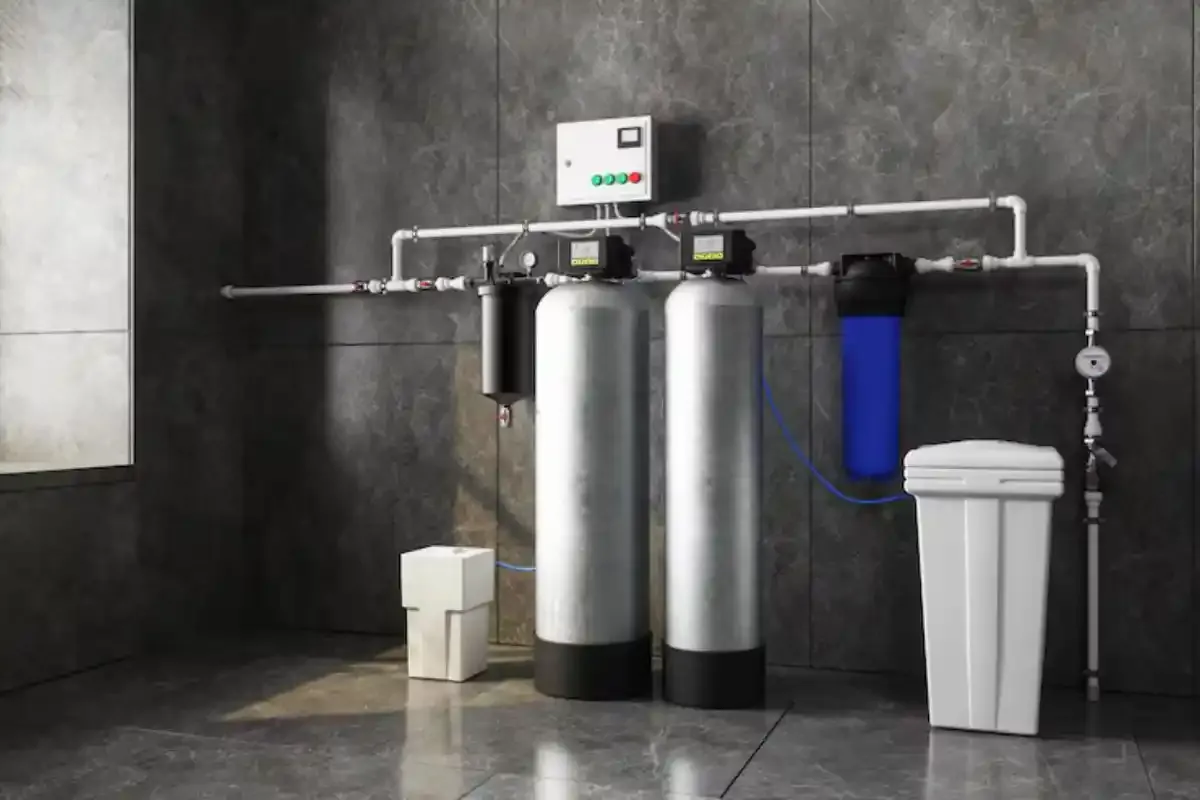
Treatment equipment works best when it is matched to a real result. A softener helps with mineral scale, while a carbon filter helps with taste and odor, and neither fixes every complaint. That is why we begin with testing, not a sales pitch.
In Apopka, FL we do not quote a hardness number from memory. Your water supplier publishes an annual water quality report, and a simple tap test at your house gives a result for your tap.
Signs your water needs treatment
White crust on faucets and showerheads, spots on dishes, stiff laundry and a film in the shower point to minerals. A rotten egg smell, a metal taste or orange stains point to something else, and the fix is different. Describe what you see when you call.
What each system does
Match the problem to the equipment.
| Complaint | Likely system | Notes |
|---|---|---|
| Scale on fixtures and spots on dishes | Water softener | Removes calcium and magnesium by ion exchange |
| Chlorine taste or odor | Carbon filter | Whole-house or under-sink |
| Sediment or cloudy water | Sediment filter | Protects fixtures and other filters |
| Drinking water quality | Reverse osmosis at one tap | Point-of-use, produces a small volume |
| Iron or sulfur smell | Specialized treatment | Needs testing first |
How we choose a system
The process is short.
- Test the tap. A simple home test or a lab sample gives a real result.
- Read the report. Your utility's annual quality report shows what is in the supply.
- Pick the fit. We recommend only what addresses the result.
- Install and set up. The system is plumbed in, tested and explained to you.
Not sure what is in your water? Call us and ask about a tap test.
Call (407) 964-8940Well water and homes outside city service
Some properties on the edges of Apopka and in nearby towns use a private well, and well water can differ a great deal from city water. A lab test is the right starting point, and treatment may need to cover iron, sulfur or bacteria. See our Zellwood page for rural properties.
Maintenance and what to expect
A softener needs salt refills and an occasional cleaning of the brine tank. Filters need new cartridges on a schedule. Ask for a simple written schedule when the system is installed, so you know what to do and when.
Water heaters and treated water
Scale shortens the life of a water heater and clogs tankless units. If you own or plan to buy a tankless heater, treating the water can protect it, and that is worth discussing at install time.
Drinking water versus whole-house treatment
Whole-house systems treat every tap, which helps fixtures, appliances and laundry. A drinking-water filter at the kitchen sink treats only what you drink and cook with. Many homes use both, and the choice depends on the test result and the budget.
Be wary of any quote given before a test. A salesperson who names a system without checking your water is guessing, and a guess can leave you with equipment that solves the wrong problem.
Installation and drain needs
A softener needs a drain for its regeneration cycle, a nearby outlet and room beside the main supply line. The plumber checks that the space and drain are right before ordering anything, and fits a bypass valve so the system can be isolated for service.
What affects treatment system cost
Prices vary with the system and the home.
- System type
- A softener, a whole-house filter and a reverse osmosis tap are different jobs.
- Capacity
- Larger homes need larger tanks.
- Plumbing changes
- Bypass valves and drain connections may be needed.
- Water test
- Lab testing adds cost but guides the choice.
- Maintenance
- Salt and cartridges are ongoing costs.
Insurance does not pay for treatment equipment. Compare the total cost of ownership before you buy.
Call for your real numberStandards and sources. Treatment equipment can be checked against published standards. NSF/ANSI 44 covers residential cation exchange softeners, and NSF/ANSI 53 covers filters that reduce health-related contaminants. Ask any seller for the certification of the exact model, and use your utility's annual water quality report together with a tap test.
Water treatment questions from Apopka homeowners
It depends on your supplier and your tap. Check your utility's annual water quality report and test your tap, and we do not quote a figure from memory.
Scale points to a softener, and taste or odor points to a filter. A test tells which.
A softener targets minerals, not contaminants. Ask for a test before relying on any system for drinking water.
Salt refills are routine, and a periodic check keeps it working.
Reducing scale can help, especially on tankless units.