First, stop the overflow
Do this before you try to clear it.
Do not flush again
More water in a full bowl goes onto the floor.
Lift the tank lid
Push the flapper down to stop water entering the bowl.
Close the supply valve
Turn the oval handle at the wall clockwise.
Put down towels
Protect the floor and have a bucket ready.
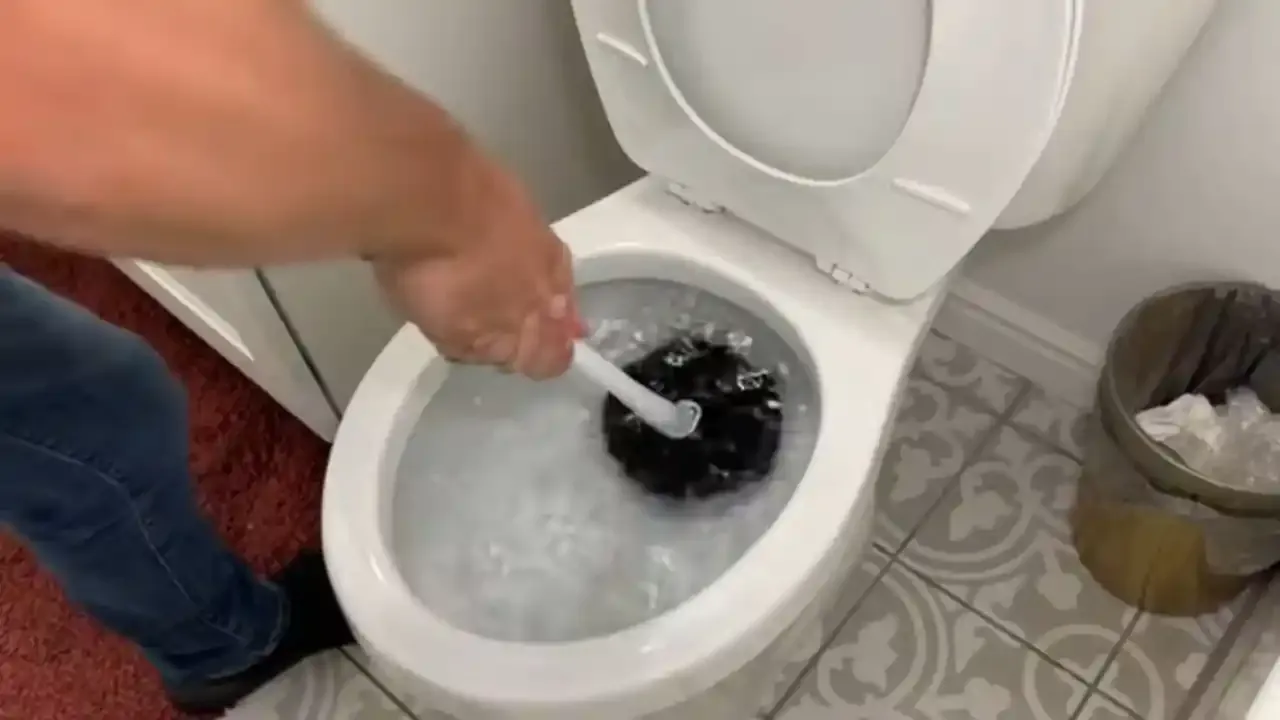
Use the right plunger
A flat-bottomed cup plunger is made for sinks. A toilet needs a flange plunger, which has a rubber extension that fits into the drain opening. Make sure the plunger is covered by water, push gently first to expel air, then push and pull firmly for 15 to 20 seconds. Many clogs clear in a few rounds.
Try hot water and dish soap
If the plunger fails, add a good squirt of dish soap to the bowl and let it sit for several minutes. Then pour hot, but not boiling, water from waist height. Boiling water can crack porcelain. The soap lubricates the clog and the warm water softens it.
What to try and what to avoid
A short guide.
| Try | Avoid |
|---|---|
| Flange plunger with steady strokes | Flushing repeatedly |
| Dish soap and hot water | Boiling water on porcelain |
| Closet auger (toilet snake) | Metal drain snakes that scratch porcelain |
| Waiting and plunging again | Chemical drain cleaners in a toilet |
Dealing with this right now? Call the line and describe what is happening.
Call (407) 964-8940Use a closet auger
A closet auger is a short snake made for toilets, with a rubber guard that protects the porcelain. Feed it into the drain, crank the handle to hook or break the clog and pull it back out. It clears most clogs a plunger cannot. Wear gloves and take your time.
What causes stubborn clogs
Too much toilet paper is a common cause, but wipes, paper towels, feminine products and children's toys cause the hard ones. Wipes marked flushable do not break down like paper. A clog that returns again and again suggests a partial blockage further down or a problem in the line.
Signs the problem is bigger
If other drains gurgle, if a tub or shower backs up when you flush, or if water rises in a low fixture, the blockage is in the main line, not the toilet. Stop using water and call a plumber. See sewer line cleaning and drain cleaning.
When to call a plumber
Call if you have tried a plunger and an auger without success, if the toilet clogs repeatedly or if you cannot remove an object you can see. A plumber can pull the toilet and retrieve an object safely. Our toilet repair page explains the process.
How to retrieve a visible object
If a toy or brush fell in, stop flushing at once. Put on gloves and try to lift the object out by hand if you can see it. If it has gone down into the trap, a plumber can pull the toilet and retrieve it from underneath without damaging the bowl. Forcing it further with a plunger can jam it deeper.
After the clog clears
Flush once and watch the water level. It should drop at a normal pace and refill without gurgling. Open the supply valve slowly, check for leaks at the base and at the supply line, and wipe the floor dry. Disinfect the area with a household cleaner, and wash your hands well. If the bowl still drains slowly, the clog is only partly cleared, so try the auger again.
Keeping toilets clear
Teach everyone in the house to flush only toilet paper and waste. Keep a small trash can with a lid beside the toilet so wipes and products have somewhere to go. A flange plunger and a closet auger under the bathroom sink mean you can act within seconds the next time a bowl rises.
Toilets and the city sewer in Apopka
Most Apopka homes connect to the city sewer, and the City of Apopka's utility pages explain service questions. If a toilet clog turns out to be in the main line, the plumber will tell you whether the blockage sits on your side of the connection.
Homes outside the city, in places like Zellwood, may be on septic. A full septic tank can mimic a toilet clog, so tell the plumber what system you have.
We also take calls from Zellwood and Ocoee for toilet and drain emergencies.
Standards and sources. Fixture repairs follow the manufacturer's instructions and the Florida Building Code, Plumbing. The EPA's WaterSense program labels toilets that use 1.28 gallons per flush or less, which is a useful standard to look for when you replace one.
Clogged toilet questions from Apopka homeowners
It may be the wrong type, or the clog may be too far down or solid. Try a flange plunger and a closet auger.
Hot tap water is fine. Boiling water can crack porcelain.
It is not recommended. Chemicals can damage the toilet and harm whoever clears it next.
The main line may be blocked. Stop using water and call a plumber.
Ask the City of Apopka where responsibility ends. A plumber can show you where the clog is.
Want a plumber to look at it? Call the line and describe what you see.
Call (407) 964-8940